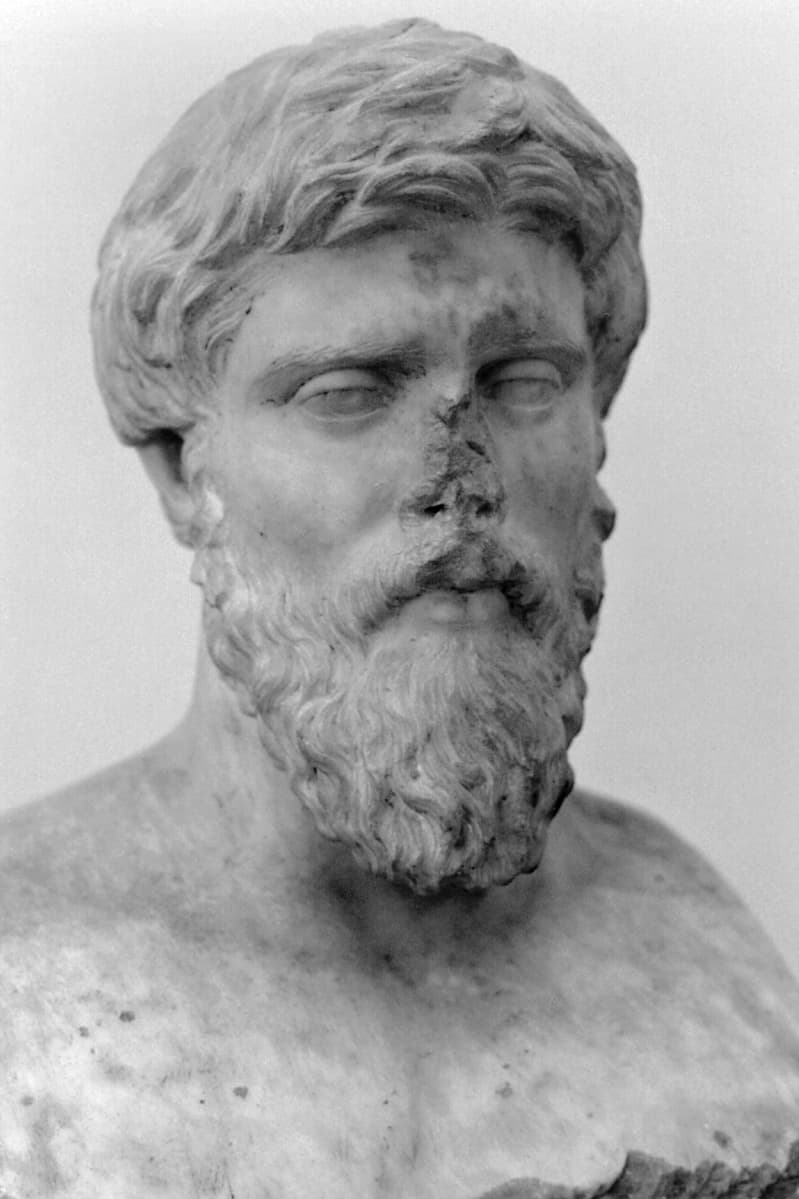
Marble bust traditionally identified as Plutarch, Delphi Archaeological Museum
Plutarch · c. 46–119 AD
Delphi Archaeological Museum
Photo: public domain
Featured agent · Corpus: Polis to Empire

Plutarch of Chaeronea

c. 46 AD — c. 119 AD · Biographer · Philosopher · Priest of Apollo

Author of the Parallel Lives and Moralia, Plutarch was among antiquity's most systematic students of character, virtue, and decision-making. His method of paired biography — Roman against Greek — remains the foundational template for comparative assessment of human agency. He is the paradigm case for Aiographica's biographical agent model.

"
The mind is not a vessel to be filled, but a fire to be kindled.
Plutarch·On Listening to Lectures

The life expectancy paradox

The "35-year ancient lifespan" is a myth of averages. Strip out infant mortality and the gap between a Roman adult and a modern American shrinks dramatically — while notable figures routinely reached 70+. The agents in this library are drawn precisely from that cohort.

Ancient Rome e(0)
21 yrs
Frier 1982
US 2023 e(0)
78.4 yrs
Crimmins 2025
Notable ancients
72 yrs
Montagu 1994
US global rank
43rd
UN 2024
Roman Empire — life expectancy remaining (Frier)
Roman adults — conditional age at death
US 2023 — conditional age at death
Notable ancient figures — median age 72

A Roman reaching age 30 could expect to live to their mid-50s. A distinguished figure likely reached their 70s — matching pre-1950 Western norms. The US conditional curve runs only ~20 years ahead by mid-adulthood (Crimmins 2025).

Frier (1982, HSCPh)Ulpian life table. e(0) ≈ 21 yrs; e(5) ≈ 37 yrs; e(30) ≈ 23 yrs.
Frier (1983, Phoenix)Pannonian skeletal evidence confirms life table to within ±5%.
Montagu (1994) & Batrinos (2008)Notable Greek/Roman figures (298 & 83 subjects): median 70–72 yrs.
Crimmins (2025, Demography)US 2023 e(0) = 78.4 yrs; peaked at 78.9 in 2014; US ranked 43rd globally.